Winter Windsurfing Rules
WISSA is an independent association governing ice and snow sailing sports. Though these disciplines—including sled racing, kite sailing, and wing sailing—share some principles with traditional sailing, they operate under distinct conditions requiring specialized rules. While we reference certain aspects of the Racing Rules of Sailing (RRS), WISSA maintains its own comprehensive ruleset: the Winter Windsurfing Rules (WWR), specifically designed for ice and snow competitions.
For complete competition rules and technical specifications, see our
WWR Documentation (PDF).
Winter Windsurfing Classes
Sled
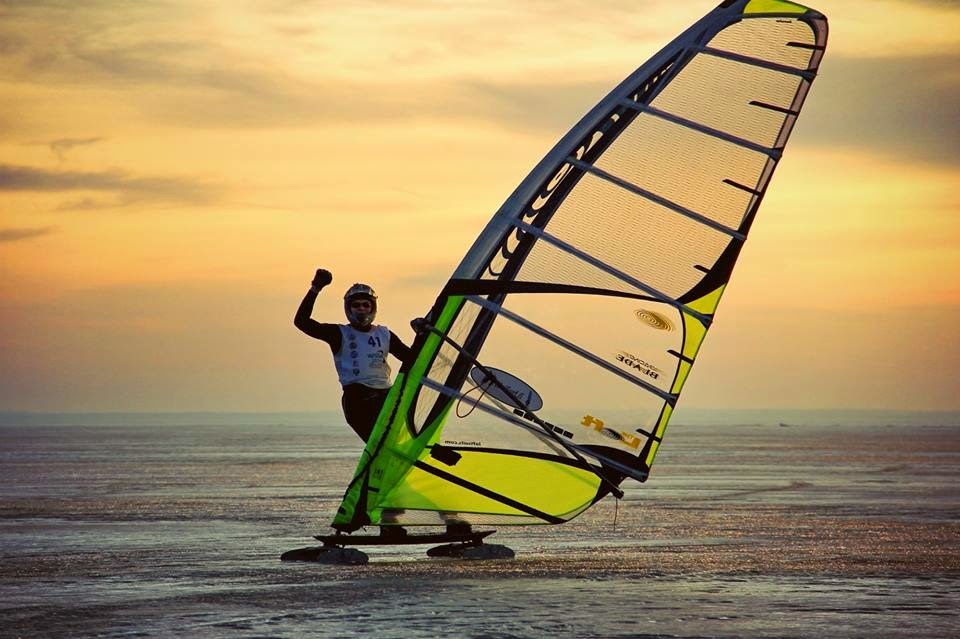
Has a windsurfing rig attached to the sled only via a standard windsurfing mast base.
May be based on blades, skis, or other sliding devices.
May be custom-built or serially manufactured.
Maximum allowed sail size is 10.0 m².
STS-SLED is a Sled on blades which:
Is steered by tilting the deck.
Is capable of downwind jibe within a 20 m wide area.
Has a maximum length of 220 cm and a maximum width of 90 cm.
Maximum allowed sail size is 8.0 m².

Kite
Is controlled by lines and a bar, held by the rider.
May be used with skis or a snowboard, but shall not be physically attached to them.
May be a tube kite (inflatable) or a foil kite (ram-air kite).
Is operated with a harness and safety system.
The maximum flying line length, measured from the bar to the kite attachment point, shall not exceed 30 meters.
Maximum kite size is 23 m².
Wing
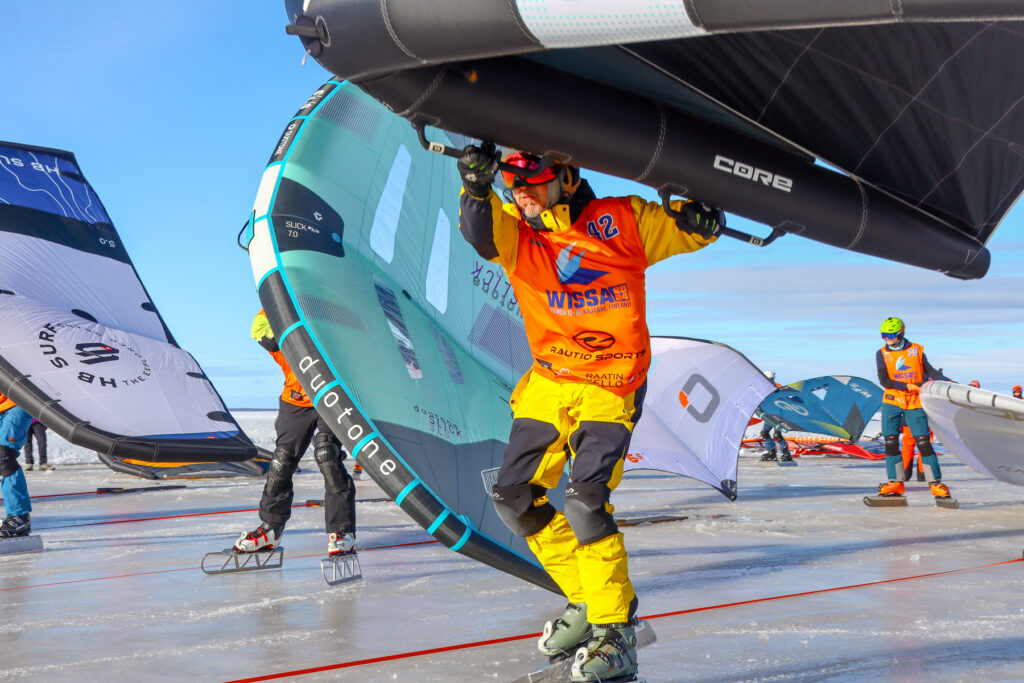
Is held solely by the rider’s arms, without any other attachments or supports.
The wingsail may only be used on either the leeward or windward side of the rider.
A harness can be used to support the arms.
Is constructed of any frame material and a durable sail.
Must have clear windows with a minimum of 400 cm² on each side.
May be used with skates or an STS-sled (as defined above).
Maximum wingsail size is 9.0 m².